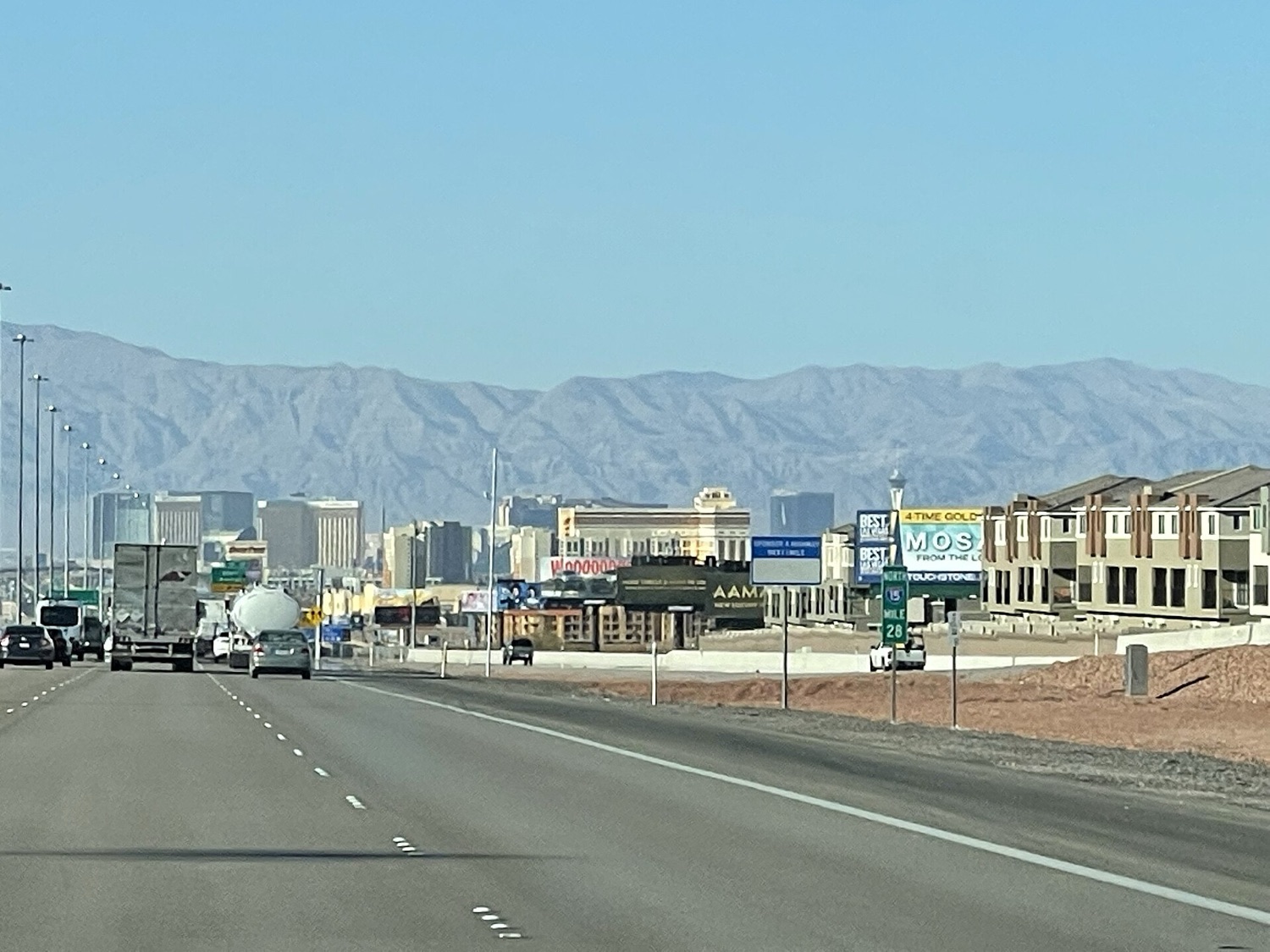
The drive from Southern California to Las Vegas on Interstate 15 is a rite of passage: a few hours of desert, a long climb, the strange little towns along the way and then the skyline rising out of the valley. It is also a hard few hours for a car, especially in summer. A little preparation keeps the trip about the tables and the shows rather than the hard shoulder.
Before you leave: the mechanical basics
- Tires: check pressures cold, including the spare, and look for cuts or bulges. Hot asphalt and a loaded car are tough on weak tires.
- Cooling system: coolant at the right level, no leaks, hoses not cracked. Long climbs in high temperatures are where marginal cooling systems give up.
- Air conditioning: if it is weak at home, it will be worse in the desert.
- Battery: heat is harder on batteries than cold. An old one is worth testing.
- Wipers and washer fluid: you will need them for bugs and dust, and summer storms in the desert can be sudden.
- Water for people: a case of bottled water in the trunk, always, in case of a breakdown.
Protect the paint before the drive
Bug splatter is the big cosmetic enemy on desert highways. Insect remains are acidic, and baked onto a hot bumper in the sun they can etch the clear coat within days. A fresh coat of wax or spray sealant before you go makes them far easier to remove. Some drivers also apply a quick detailer to the front bumper, mirrors and windshield at a fuel stop halfway.
On arrival
Once you have checked in, give the front of the car ten minutes: soften bug remains with a damp microfiber or bug remover, wait a minute and lift them off gently. Do not scrub dry. A waterless wash kit in the trunk handles the fine desert dust that settles everywhere. Our waterless wash guide covers the technique.
Parking in the heat
A car parked on an open surface lot in the desert summer gets extremely hot inside. Use a reflective windshield sunshade, crack nothing open on an open lot, and do not leave electronics, sunscreen, aerosol cans or drinks in the cabin. If you can, choose covered parking or a garage level away from the open roof. Many Strip resorts charge for both self-parking and valet these days, so it is worth checking the rates before you arrive and deciding which suits your stay.
The valet line
Pulling up at a big resort means a valet will see your car in bright daylight, open the doors and sit in your seat. Clear out rubbish and valuables, take garage door openers and anything with your home address, and note your mileage and fuel level. A clean car is not required, but it is a nice way to arrive.
The drive home
Coming back after a long weekend, the car will be dusty, the windshield gritty and the front end covered again. Wash it properly within a few days: rinse first, because desert dust is abrasive, then a careful hand wash, and clean the glass inside and out. And whatever the result at the tables, it is worth a final check of tire pressures before heading back across the desert.


