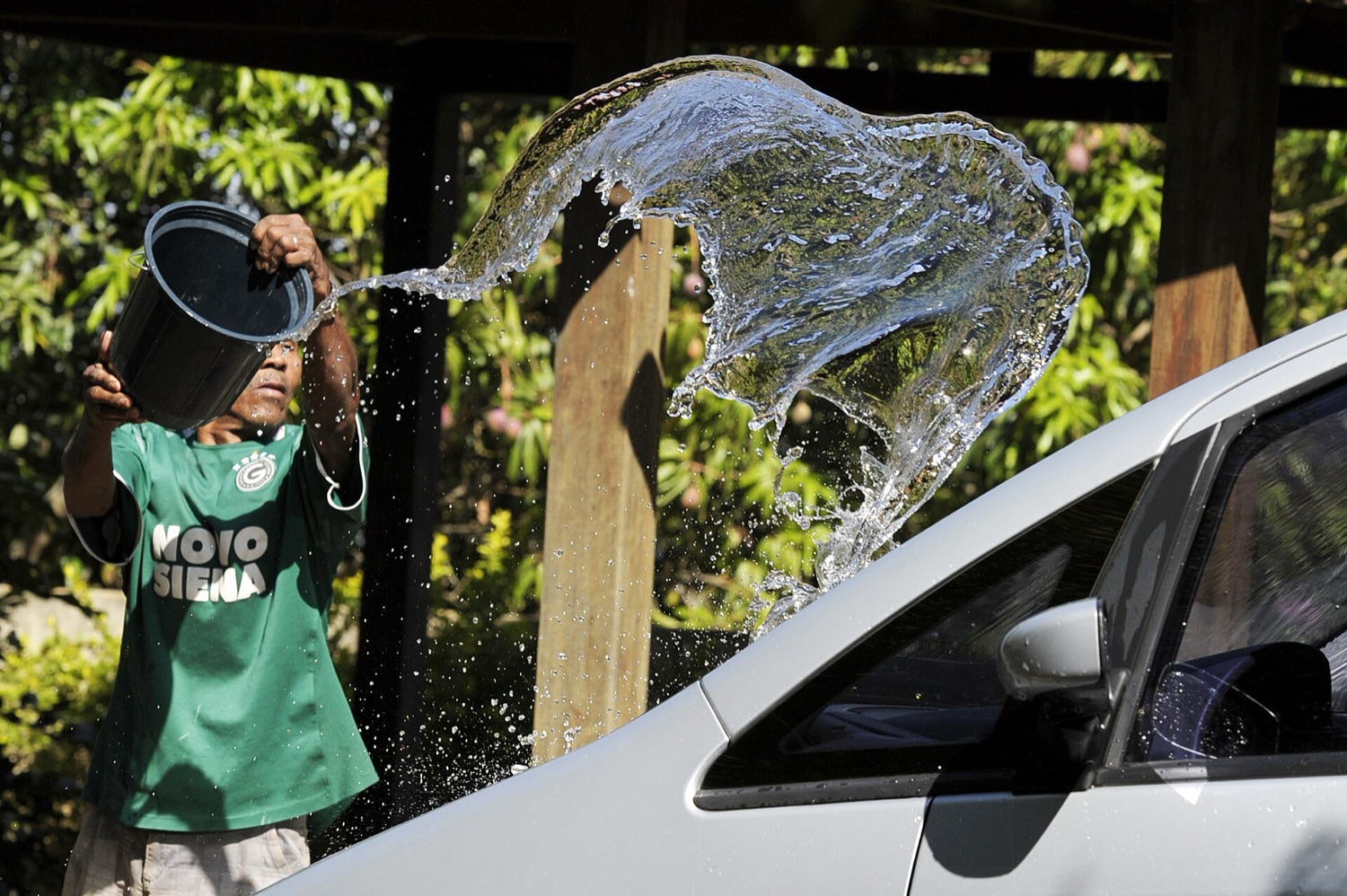
During California's severe drought of the 2010s, a clean car started to look slightly suspicious. Lawns went brown, fountains were switched off and statewide emergency rules limited outdoor water use, including a ban on washing vehicles with a hose that lacked a shut-off nozzle. Yet people still needed clean windshields and wanted cars that did not look abandoned. That tension is a big part of why waterless and mobile washing grew so fast.
How much water does a car wash use?
Exact figures vary a lot with equipment and habits, so treat these as the commonly quoted ballpark numbers rather than precise measurements:
| Method | Approximate water per car |
|---|---|
| Home wash with an open hose | Often quoted around 100 gallons, sometimes more |
| Home wash with buckets and a shut-off nozzle | A fraction of that, perhaps 10 to 20 gallons |
| Professional wash bay or tunnel | Often quoted around 30 to 45 gallons of fresh water, less with reclaim systems |
| Rinseless wash | About 1 to 2 gallons |
| Waterless wash | A few ounces of product |
The open hose is the outlier. A garden hose left running while you soap the car can easily pour out several gallons a minute, and nearly all of it ends up in the gutter.
Where the water goes matters too
Water use is only half of the story. A home wash on a driveway sends soap, brake dust, oil and road grime into the street, and in most cities the storm drains lead straight to creeks, rivers or the ocean without treatment. Commercial washes are generally required to send their wastewater to the sanitary sewer or treat and reuse it. Waterless and rinseless methods produce almost no runoff at all: the dirt ends up in the towels, which go through a washing machine. We look at that side in where car wash water goes.
If you live somewhere dry
- Check local rules. Restrictions on hose use, wash days and runoff come and go with water conditions.
- Use a shut-off nozzle on any hose, always.
- Choose rinseless for genuinely dirty cars and waterless for dust and pollen.
- Use a commercial wash with a water reclaim system for heavy dirt.
- Wash less often but protect more: a good sealant means dust and grime come off with less effort and less water.
Is waterless really safe on paint?
Yes, on the right car with the right technique. The products are designed to encapsulate and lubricate dirt so it lifts into the towel. The risk comes from using them on heavy dirt, or from using too few towels. A dusty car in a dry climate is exactly the case they were made for.
Dry regions also tend to be sunny, hot and dusty, which is hard on paint and interiors. Anyone who has driven across the desert to Las Vegas or Palm Springs in August knows how quickly a car collects a fine layer of grit. A quick waterless wipe-down on arrival keeps it from building up, without anyone having to apologise for using the hose.


