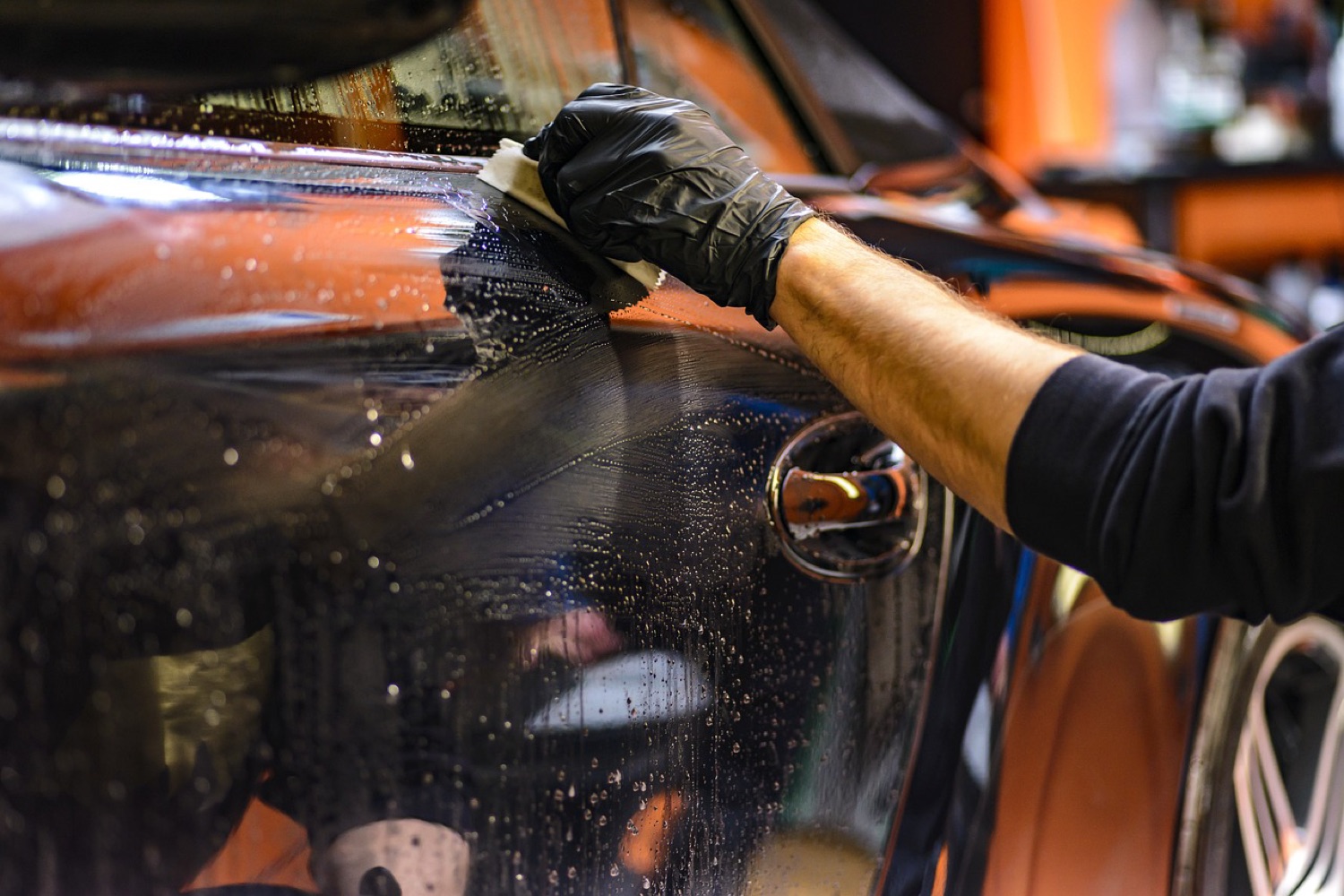
Wash a car, dry it and then run your fingertips lightly across the hood inside a thin plastic sandwich bag. If it feels gritty rather than glass-smooth, the paint is carrying bonded contamination that washing does not remove. That is the job of a clay bar.
What it removes
Paint picks up tiny particles that stick rather than sit on the surface: industrial fallout and rail dust, iron particles from brake dust, overspray from nearby painting, tree sap mist and road tar. They make the paint feel rough, dull its gloss and stop wax or sealant from bonding properly.
A detailing clay bar is a soft, slightly sticky synthetic compound. Glided over a lubricated surface, it grabs and pulls these particles out of the paint without abrading it the way a polish does. Clay mitts and clay towels do the same job faster, with a slightly higher risk of marring on soft paint.
When to clay
- Once or twice a year for a daily driver.
- Before polishing, waxing or applying a ceramic coating.
- When paint feels rough after a wash.
- After parking near construction, a rail line or an industrial site.
It is not something to do every wash. Claying removes some of whatever protection is on the paint, so it should always be followed by a coat of wax or sealant.
Step by step
- Wash and dry the car thoroughly. Claying a dirty car just drags the dirt around.
- Optional: use an iron remover first. It dissolves much of the iron contamination chemically so the clay has less to do.
- Knead a piece of clay into a flat patty about the size of your palm.
- Spray clay lubricant generously on a small section, about 50 by 50 cm.
- Glide the clay back and forth in straight lines with almost no pressure. You will feel and hear it grab at first, then go smooth.
- Wipe the section with a clean microfiber and check with your fingertips.
- Fold the clay to a clean face when it looks dirty. If you drop it, throw it away: it will have picked up grit.
- Protect the paint with wax, sealant or a coating once you have finished.
Glass and wheels
Clay works on exterior glass, removing the film that makes wipers chatter, and on the faces of clear-coated wheels. Use a separate piece for each so the contamination from wheels never comes near the paint.
Is it worth it?
For a car you care about, yes. The difference in how wax goes on and how long it lasts is noticeable, and the gloss after clay and a fresh coat of protection is what most people think of as a "detailed" car. It is the step show-car owners never skip, and you can read how they prepare for big events in our piece on detailing for a casino car show.


