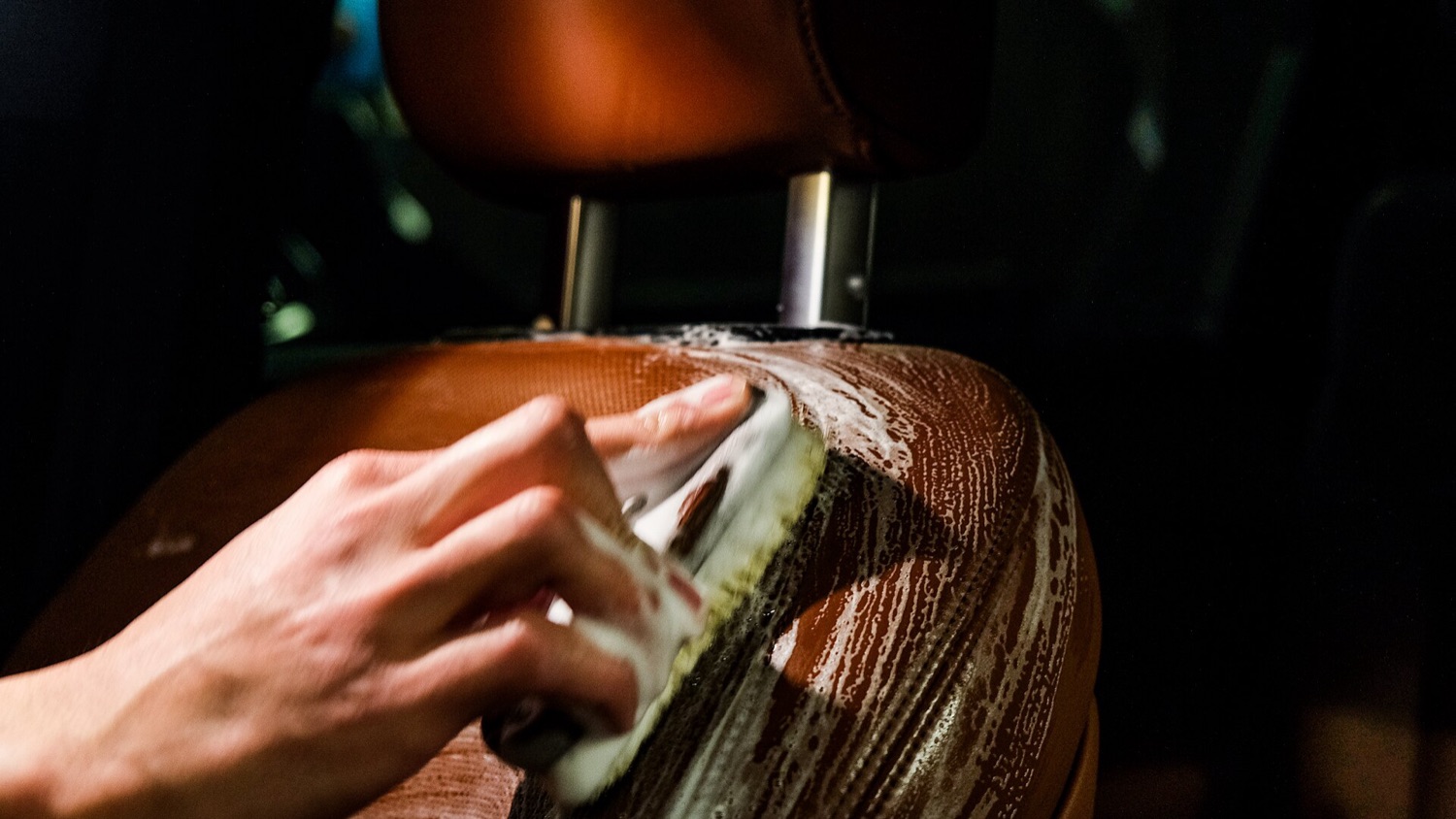
Leather seats are one of those features that feel luxurious in the showroom and look tired a few years later if nobody looks after them. The good news is that leather care is simpler than the shelves of products suggest, once you know what modern automotive leather actually is.
Most car leather is coated
The vast majority of car leather today is pigmented, or "protected", leather: the hide is finished with a coloured, flexible coating, a little like paint on metal. That coating is what you touch and what gets dirty. It is also why heavy oils and greasy conditioners do little good: they mostly sit on the surface. A small number of luxury and classic cars use aniline or semi-aniline leather with little or no coating; these are more delicate and absorbent and need extra care.
Not sure which you have? Put a tiny drop of water on a hidden area. If it beads, the leather is coated. If it soaks in and darkens the hide, treat it as uncoated.
A simple routine
- Vacuum first, using a soft brush attachment and the crevice tool along the seams, where grit wears the coating like sandpaper.
- Clean with a pH-neutral leather cleaner. Spray it onto a soft brush or microfiber, not directly onto perforated seats.
- Agitate gently, especially on the side bolster you slide across when getting in, which carries the most wear and the most dirt.
- Wipe off the lifted dirt with a clean, damp towel and dry.
- Protect with a light, non-greasy leather protectant or conditioner. It should leave a natural, matte feel.
How often
A quick wipe of the driver's seat every couple of weeks and a full clean every two to three months is plenty for most cars. Light-coloured leather shows dye transfer from jeans quickly, so it may need more frequent attention.
What to avoid
- All-purpose cleaners and household wipes that contain alcohol or strong alkalis.
- Silicone sprays and shiny "leather glazes" that make seats slippery.
- Soaking perforated or ventilated seats.
- Leaving the car in strong sun with no shade; UV and heat dry and fade leather. A windshield sunshade helps a lot.
Damage and repairs
Small scuffs in the coating can often be touched up with a colour-matched repair kit. Cracks and worn-through bolsters are a job for an upholstery or leather repair specialist. Catching wear early, while it is only in the coating, keeps repair simple.
Leather that is clean and supple makes a car feel looked after. It is a detail people notice in passing, from the friend you give a lift to the valet who drives your car to the garage at a hotel or casino, and it is one of the best value jobs in detailing.


